
Locals call Lake Ogawara takara-ko, the "treasure lake", and the fish landings back it up. It has led Japan in catches of both wakasagi and shirauo (icefish). For a visitor, that treasure comes in two forms: ice fishing for wakasagi on a frozen inlet in winter, and gathering shijimi clams by hand in summer. Both are cheap, easy and family-friendly, as long as you know the rules and check conditions before you go.
Where fresh water meets the Pacific
Ogawara is the largest lake in Aomori and the 11th largest in Japan. Mineral-rich water flows in from the Hakkoda mountains, while at high tide seawater pushes back up the Takase River from the Pacific. The mix makes it brackish, and it's that mix that makes it so productive.
Around the main lake lie smaller lakes and inlets, including Anenuma, Uchinuma and Tamonoki-numa. Together they're known as the Ogawara lake group and are listed among Japan's important wetlands. The main lake's wide, shallow shores make it a swimming spot in summer too.
The lake's treasures
The Ogawara-ko Fisheries Cooperative lists five "treasures" the lake is known for:
- Shijimi clams: large, prized freshwater clams, registered as a protected regional product ("Ogawara-ko Yamato shijimi"). They take four to five years to reach harvest size.
- Shirauo (icefish): small, translucent and delicate, and Ogawara lands more of them than anywhere else in Japan.
- Wakasagi (pond smelt): also Japan's top catch. Unusually, Ogawara has two groups: small fish (4–6 cm) that spend their whole lives in the lake, and larger fish (8 cm and up) that spend time in the Pacific before returning to spawn.
- Mokuzu crab: the Japanese mitten crab, a close relative of the Shanghai hairy crab, and the base of a rich local crab soup.
- Wild eel: Ogawara was once Japan's top eel producer, and the eel here is often described as coming from the species' northern limit. Catches are much smaller today.
Commercial fishing for wakasagi and icefish runs in spring and from autumn through winter, and it's the backbone of the lake's economy.
Ice fishing for wakasagi
Winter is Ogawara's headline season, but it depends entirely on the ice. Organized ice fishing happens on the smaller inlets, which freeze earlier than the open lake.
Anenuma (Misawa side)
The most reliable and visitor-friendly option. Anenuma freezes earlier than the main lake, and you can walk out from the parking area. A local operator runs the fishing ground when the ice is safe:
- Season: roughly mid-January to late February or early March, only while the ice is safe. It can close at short notice for bad weather or thin ice.
- Hours: 6:30–15:00 on weekdays and 5:30–15:00 on weekends and holidays.
- Cost: ¥300 fishing permit and ¥500 parking. Tents, ice drills, rods and boots are available to rent, so you can arrive with nothing.
- Eating your catch: freshly caught wakasagi can be cooked on the spot as tempura or karaage.
Uchinuma
The cooperative also opens Uchinuma for ice fishing in good years, but recent winters haven't cooperated. In 2025 it opened on February 10 and closed again two days later, and for the 2026 season it was cancelled outright for safety. As of October 2026, dates for the 2027 season haven't been announced.
Warm winters make Ogawara's ice unreliable. Before booking a trip around ice fishing, check the Anenuma operator's and the cooperative's latest notices, and have a backup plan. An indoor wakasagi pond near Anenuma, with tackle included, has been one option on days the ice is closed.
Gathering shijimi in summer
Each summer the cooperative opens a designated area of the lake where anyone can gather shijimi clams by hand. The 2026 details:
- Dates: July 1 – August 31, closed August 13–16 for the Obon holidays.
- Times: check in from 8:00 to 13:00, and gathering until 16:00. Both end earlier in bad weather.
- Fee: ¥500 for adults and ¥300 for children (elementary school age and younger).
- Rules: hands only. Rakes, baskets and other tools aren't allowed, and wardens will confiscate them and call the police. Use only the bags sold on site, stay inside the marked area, and follow the wardens' instructions.
Outside the designated area and season, taking shijimi is poaching. The clams are a commercial resource that the cooperative manages carefully.
Permits and rules
- Fishing permit: a day permit costs ¥300 and covers the main lake, Uchinuma and Anenuma. Tamonoki-numa charges its own ¥500 fee.
- Ice fishing: only where and when an organized fishing ground is open. Don't walk out onto unmanaged ice.
- Shijimi: only inside the summer gathering area, by hand, during opening hours.
Outside winter, people also fish the lake and the connected rivers for carp and crucian carp, and some anglers target sea bass around the Takase River, which links the lake to the sea.
Ogawara-ko Fisheries Cooperative (notices, lake data and the lake's products), Misawa tourism: Anenuma ice fishing, and Aomori tourism (all in Japanese). Fees and dates change, so confirm before you go.
Getting there
- By train: take the Tohoku Shinkansen to Hachinohe, then the Aoimori Railway north. Kamikita-machi station is about a 20-minute walk from the lake, and Misawa station is about 10 minutes by car from Anenuma.
- By air: Misawa Airport is about 15–20 minutes by car from Anenuma and the lake.
- By car: the Kamikita interchange is about 10 minutes from the lake.
Misawa is also home to a large air base. In 2025, the lake's summer festival featured a flying display by the Blue Impulse aerobatic team.
テントを借りたいです。Tento wo karitai desu.
"I'd like to rent a tent." It's the first thing to sort out at the Anenuma ice fishing ground.
しじみ採りの受付はどこですか?Shijimi-tori no uketsuke wa doko desu ka?
"Where do I sign up for shijimi gathering?" You need to check in before 13:00.
More phrases, and the etiquette that goes with them, are in lake fishing manners & Japanese phrases.
Moon phase, tide, and ice
Ogawara really is tidal, in a small way. The Pacific tide reaching up the Takase River is why the water is brackish at all. But the effect is strongest near the river and much weaker across the rest of the lake. For a wakasagi angler sitting over a hole in the ice, it matters far less than ice conditions, the weather, and finding the school.
Treat moon phase as a tiebreaker for choosing a day, and in open water, pay attention to the tide near the Takase River. More in how moon phase affects your bite window.
Check the ice before you book, bring cash for permits and parking, and in summer, leave the rake at home.
Made by us
TsureruKana
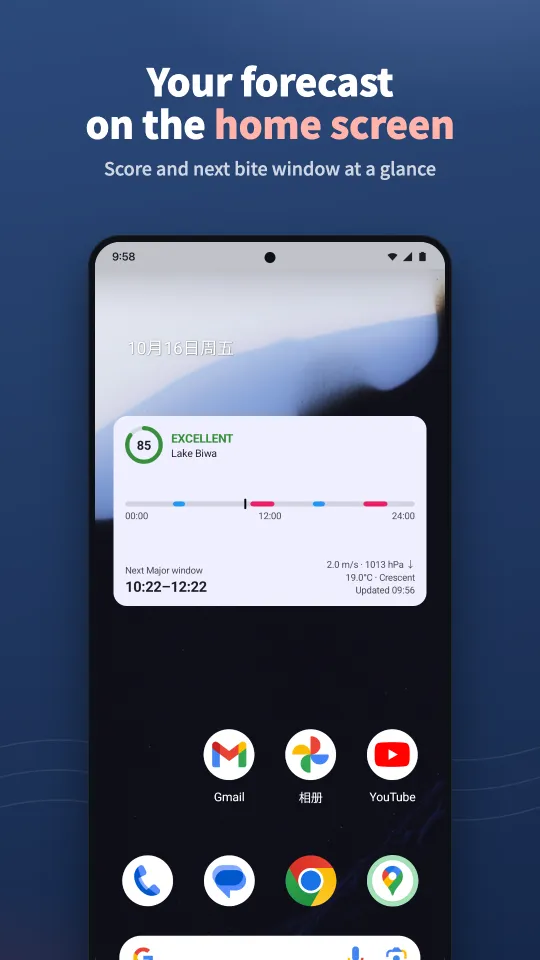
Our app scores major and minor feeding windows for Lake Ogawara day by day. It's worth checking alongside the weather and ice reports, not instead of them.

iPhone version coming soon · See everything the app does